Background
Building a computer on one's own is often too complex, time and space consuming for the average user. It requires specialized knowledge and is usually only practical for enthusiasts with high expectations for performance. On the other hand, traditional desktop computer products are usually bulky and stationary, and many components—like speakers or drives—can’t be easily repurposed when the computer isn’t in use.
To make desktop computing more accessible and versatile, I thought of a modular computer concept that is easy to assemble, disassemble, and upgrade. The compact form factor would suit everyday users, not just tech experts. Additionally, certain modules—such as speakers—could be designed for standalone use, like functioning as Bluetooth speakers when detached from the computer. This ensures components are useful even when the main system is off, maximizing functionality and efficiency.
Design
I was inspired by the idea of building blocks (such as LEGO, or even the simpler ones), which are so intuitive that young children could master. So I designed this modular computer as a combination of different cubes—each cube houses a major component like the CPU, Graphics Card, Memory, etc. And these cubes can be attached together freely to form a computer. Here's a basic sketch:
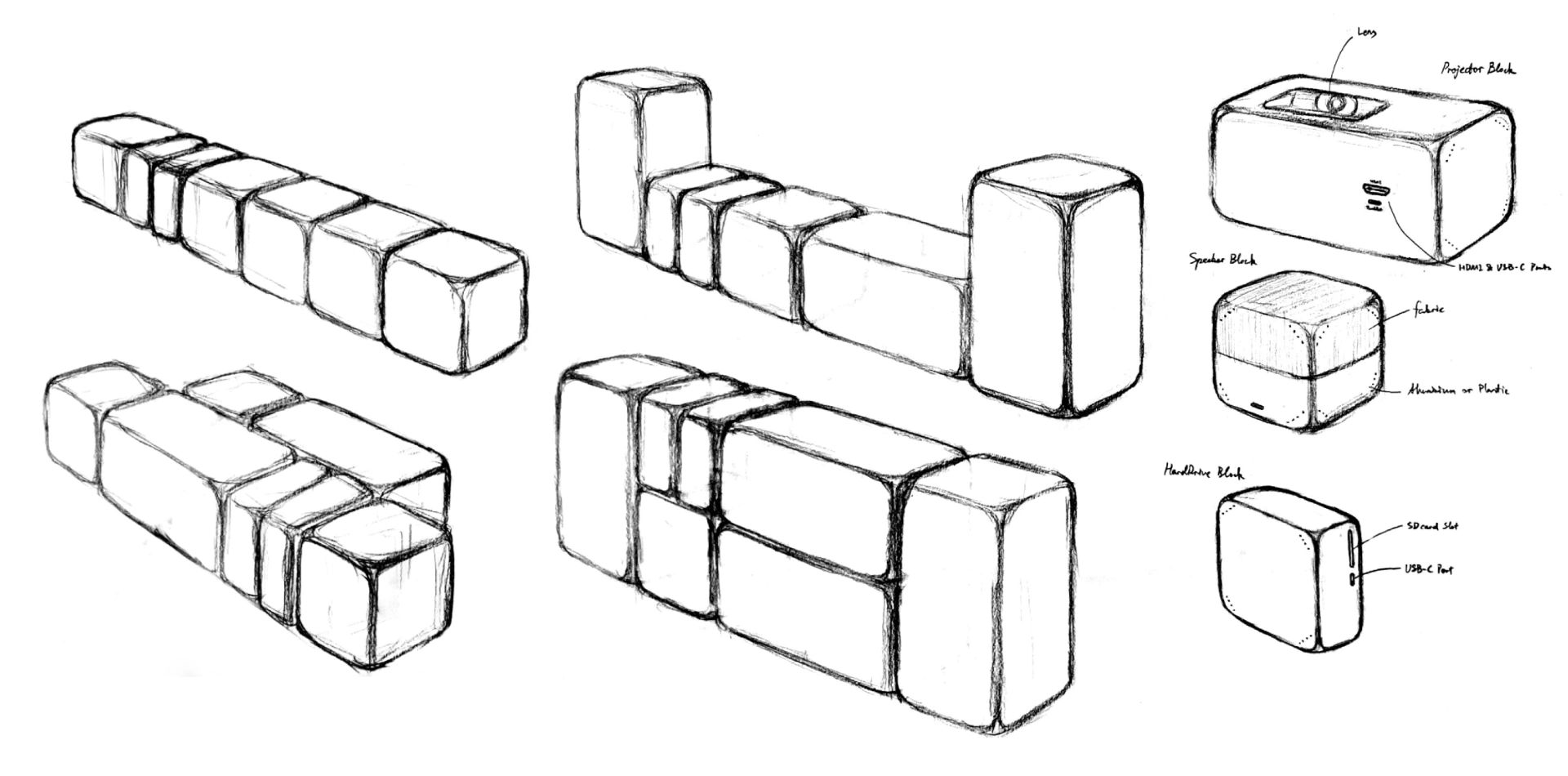
Since this is just a concept and technological limits can be somewhat ignored, the cubes could magnetically attach to each other, with power and data transfered through metal contacts or wirelessly. This ensures a simple setup and the user only need to plug in power to the main component (that houses the CPU and power adapter).
Renders
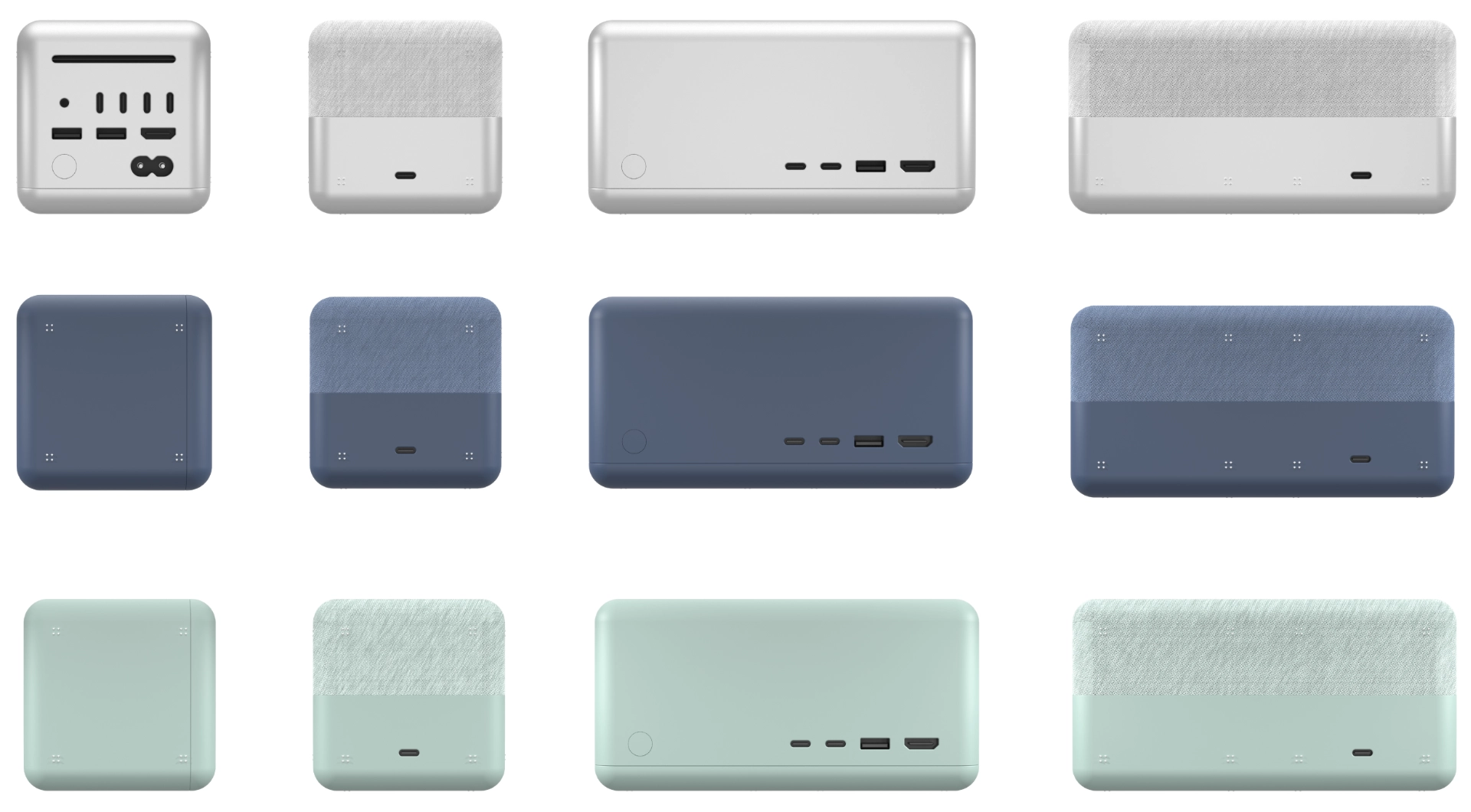
To showcase what such a computer would look like, I created some basic renders. Different materials and colors are available to choose from for each component so that users can have a personalized setup.